Sales: what's worth it and what's noise
Franclau · 10 September 2026 · 5 min read

Sales stopped being an event a long time ago. Between seasonal campaigns, each retailer's own promotions, themed days and discounts that never end, it's hard to find a moment of the year when something isn't reduced somewhere.
That has an uncomfortable consequence: the sign hardly tells you anything any more. It isn't telling you the time to buy has come, it's telling you there's a campaign on. To separate what's worth it from what's noise, you have to look at other things.
What legally counts as a sale
The legal definition is stricter than people imagine, and it explains quite well what you can expect from a campaign.
Spain's Retail Trade Act says there is a sale when items are offered, in the same establishment where the business normally operates, at a lower price than they had before. And it excludes two cases: products that were never offered at their regular price and products bought specifically to be sold cheaper.
The same law also prohibits offering damaged items as reduced.
As for the calendar, since Royal Decree-law 20/2012 the dates have been deregulated. Each retailer decides when to hold sales and for how long. That's why they no longer all start on the same day or last the same time.
And the obligation to show the previous price next to the reduced one still stands, the previous price being the lowest that retailer has charged for that product in the previous thirty days.
What follows from that
Three practical ideas come out of that definition.
A genuine sale means that product was previously on sale at its normal price in that same place. If an item only appears during the campaign and never before, the sale label doesn't strictly belong to it.
The percentage you see is calculated on a limited reference. It's a real guarantee, but it's a thirty-day guarantee.
And the freedom over dates works in favour of those who shop with a plan. If the discount can come at any time, waiting stops being risky. What becomes risky is buying in a hurry because it looks like the opportunity won't come again.

What's usually worth it
There are no universal rules, but there are patterns that repeat because they reflect how retail works, not what the advertising says.
Seasonal products at the end of their season, to start with. Winter clothing loses commercial value as soon as the cold is over, and the same goes the other way round. Buying out of season is the most predictable way to buy cheap, at the cost of waiting months to use it.
Models that are being replaced, too. When a range is refreshed, the previous version drops on its own. It's usually an excellent buy if you don't care much about what the new version adds.
And above all, what you had already decided on. Buying something in the sales that you were going to buy anyway is pure saving. The rest is spending, even if it comes with a discount.
What's usually noise
A discount on a theoretical reference price, when the comparison isn't against what that retailer used to charge. There, the percentage can be spectacular and mean nothing.
The product you discover during the campaign. It may end up being a good buy, but you arrive with no reference points, without having compared and in a hurry. Three conditions that combine terribly.
Urgency used as an argument. Countdown timers and last-units warnings are design devices. They say nothing about whether the price is good.
And savings counted as money discounted. What you save isn't the euros they take off, it's the ones that stay in your pocket. Three reduced items you didn't need save nothing.
The real problem is arriving without a list
Most of the money lost in a campaign isn't lost by paying too much. It's lost buying things you weren't going to buy.
And that happens for a very specific reason: most people arrive without a list. When you don't have one, the shop's homepage writes it for you, and it's ordered according to what that shop wants to sell.
Making that list isn't easy with the usual tools either. Every retailer has its own favourites, designed to keep you inside. If you've been saving things for months, your intentions are spread across lists that don't talk to each other and none of them gives you the full picture. That's exactly when a campaign catches you unprepared.
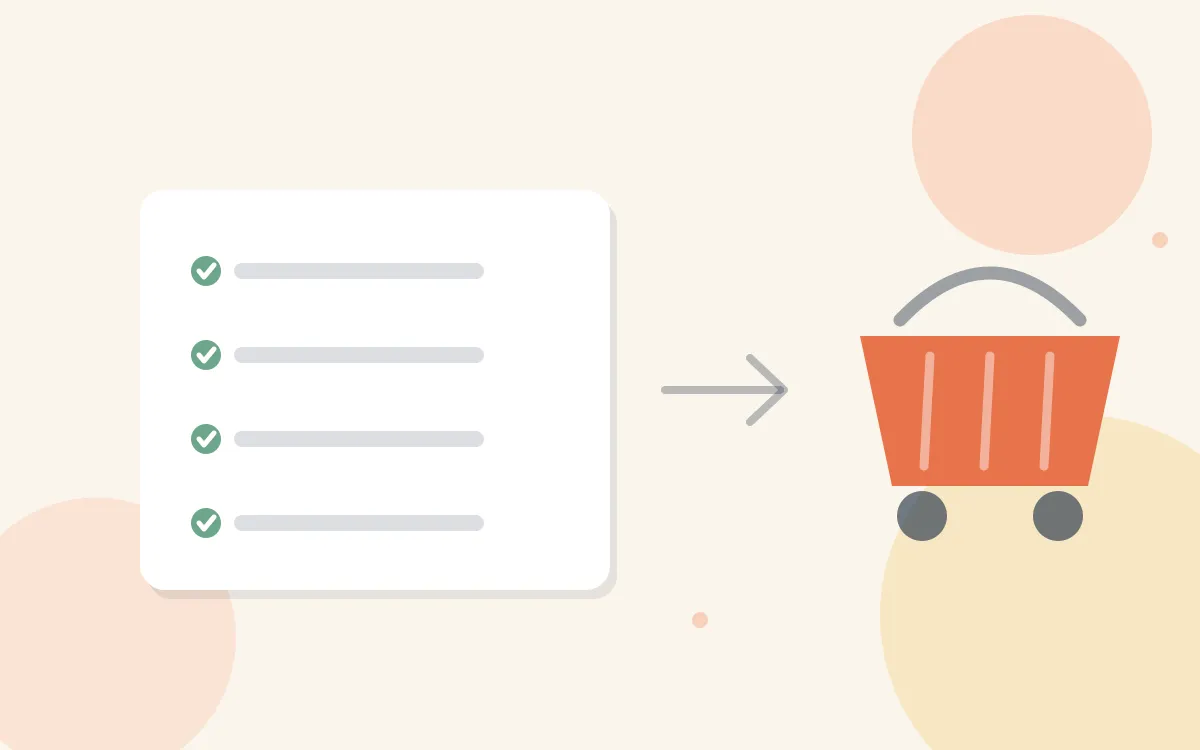
How the campaign changes with your list in front of you
Spaidoo brings products from different shops together in a single list. Everything you've been saving throughout the year, wherever it came from, in one place that's yours.
The effect is direct. Instead of going in to see what's there, you go in to check whether what you already wanted has come down. The campaign stops being a shop window and becomes a filter you apply to a list you wrote yourself, calmly, weeks before.
There's another, quieter effect that may be even more valuable. What you don't buy isn't lost. When the product is still saved after the campaign, saying no stops hurting, because you're not giving anything up, just putting it off. And with the deregulated calendar, there will be more opportunities.