Black Friday: the real work is done in October
Franclau · 10 September 2026 · 6 min read

Almost everyone arrives at Black Friday without knowing what they want to buy. You open your phone on Friday morning, you're faced with a wall of discounts and you decide right there, in the heat of the moment, with twelve tabs open and the feeling that if you don't grab it now someone else will.
That order is back to front. And it goes a long way to explaining why so many November purchases end up returned in January or stuck in a wardrobe, never used.
Where this campaign comes from
Until 2012, in Spain you could only hold sales in two specific periods of the year. Royal Decree-law 20/2012 deregulated the calendar, and since then article 25 of Spain's Retail Trade Act says each retailer can hold sales whenever it likes and for as long as it wants. That change is what allowed Black Friday to take hold here as strongly as it has.
For the buyer this has two sides. The good one: there are many more real opportunities throughout the year. The less good one: the discount is no longer an event and has become the default state of online retail. When everything is always reduced, the sale sign stops informing and becomes decoration.
That's where the campaign beats you. You're not up against the price, you're up against the rush. And the rush only works on those who haven't decided anything yet.
A rule that makes October the month that matters
There's a rule almost nobody knows about that should change your calendar.
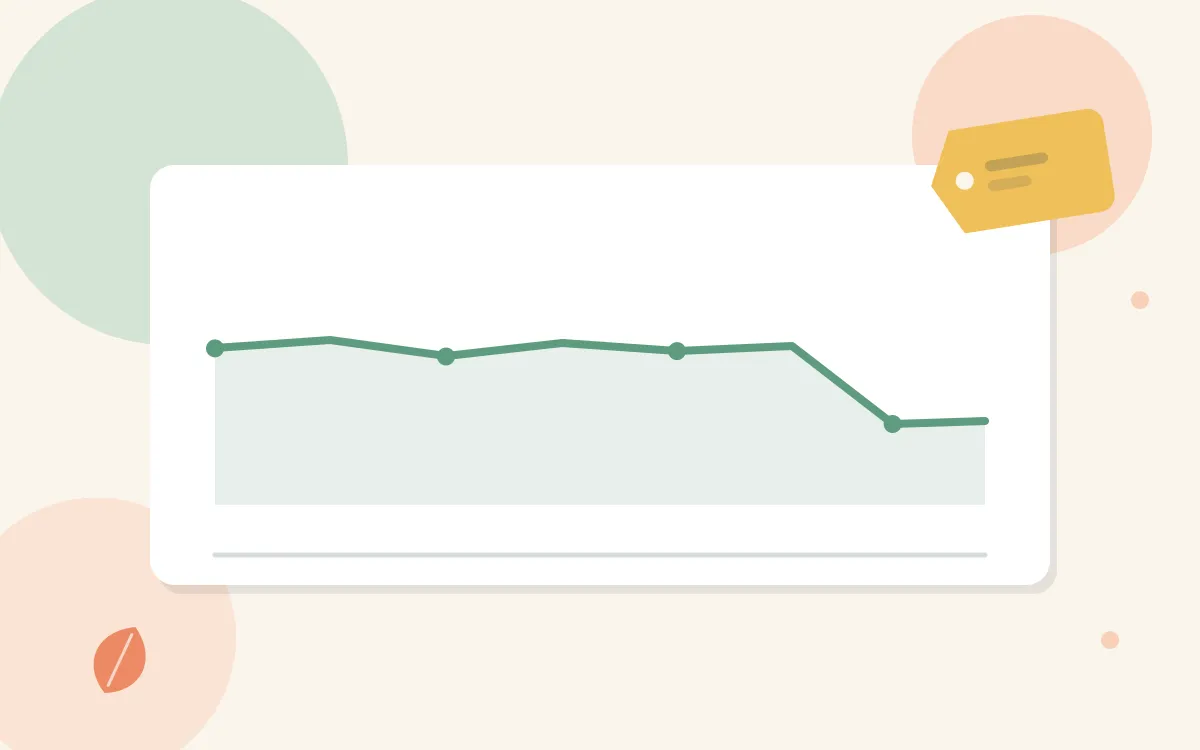
Since Royal Decree-law 24/2021 transposed the so-called EU Omnibus Directive, when a retailer advertises a reduced product it has to show the previous price. And the law doesn't let that previous price be whatever suits the shop: it defines it as the lowest amount that same retailer has charged for that same product during the previous thirty calendar days.
In plain terms: what happens to a price during the month before the campaign determines the discount they can advertise to you afterwards. If you start watching a month ahead, you no longer depend on the sign.
This doesn't mean every discount is suspicious. Many are perfectly real. It means you have a cheap way of checking, and that it only works if you start early.
The three things to decide with a cool head
Getting ready for a campaign involves three different decisions, and none of them is made well with a countdown timer flashing on the screen.
The first is what you want. Without looking at prices yet. What you need, what you've been putting off for months, what has broken, who you have to buy a present for in December. It's the part that weighs most on the final result, and exactly the one the campaign pushes you to skip.
The second is where it is. The same product lives in many places, and very often the best price isn't where you first saw it. This step is boring, so do it with time to spare. At eleven o'clock on Thursday night, nobody is going to do it.
The third, and the one that saves the most money, is what it's worth to you. Not what it costs. What it's worth. If you get to Friday knowing the price at which that product seems a good buy to you, there's nothing left to weigh up: either it's below that or it isn't. A two-second decision, with nothing for the urgency to work on.
All three produce information. And that information has to be kept somewhere, which is exactly where most people's system falls apart.

The problem with saving things from many shops
Every retailer has its own favourites list, with its own account, its own design and its own expired session. If you prepare for the campaign properly, you end up with products spread across four or five lists that don't talk to each other, plus a handful of screenshots lost in your phone's gallery, plus two links you sent yourself in a message.
On Friday, that material is useless. You can't compare it at a glance, you no longer remember why you saved some things and a couple of links lead to sold-out products. Once the campaign is under way, nobody rebuilds all that. What people do is open the homepage of whichever shop is closest to hand and buy whatever is put in front of them.
And it isn't a failure of organisation on your part. Favourites lists are designed by the seller, and they're made for you to buy there, not to compare across several places.
What Spaidoo does about it
Spaidoo brings products from different shops together in a single list.
Instead of spreading your candidates across lists that belong to each retailer, you save them all in one place that's yours. When the campaign arrives you don't have to rebuild anything: you open your list, see at a glance everything you've been picking out for weeks and decide with the information you prepared yourself.
It changes your position in the game. You stop reacting to what you're offered and start checking whether what you're offered fits what you had already decided. It seems like a small difference, and in results it's huge.
And the list is still there afterwards. What you don't buy in November isn't lost, it stays there waiting. And with the deregulated retail calendar, there's always a next time.
What to do in the coming weeks
Start by emptying your head. Save everything you can think of that you might want to buy, without filtering and without looking at prices. Discarding later takes a minute; remembering later something you didn't write down doesn't happen.
When the list is complete, go through it once and separate what you need from what you fancy. You don't have to give up the latter. You just need to know which is which before someone tries to sell it to you as if it were the former.
Then spend a while looking for each product in more than one shop. This is the step that buys you peace of mind on Friday.
From then on, check the prices now and then. No need to obsess; a glance every few days is enough to know whether a price has been where it is all month or has moved just before the campaign.
And on Friday, don't browse. Open your list. If something fits what you decided, buy it. If it doesn't, it stays where it is.